

-
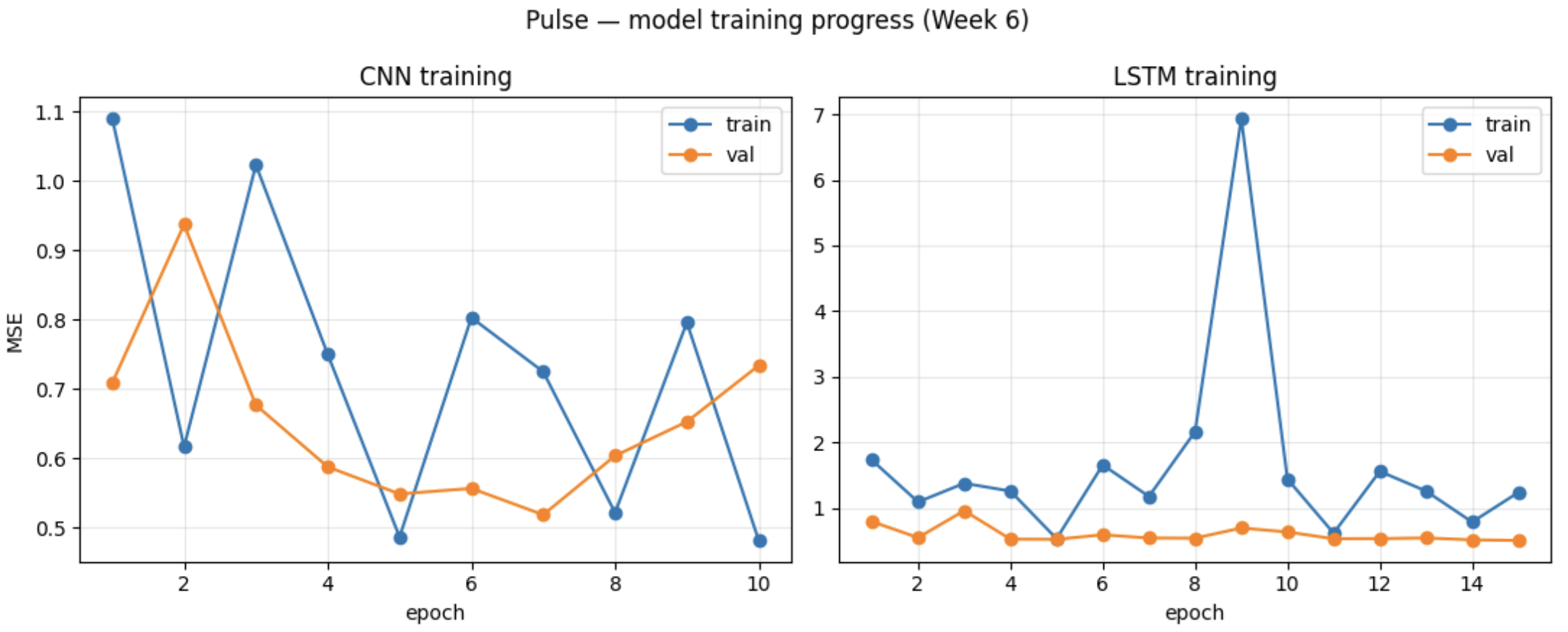 Week six: training the CNN for the first time, and the LSTM that should have beaten it
I trained both models myself this week. The one that was supposed to be better came out worse, and I'd rather show that than the flattering curve.
Week six: training the CNN for the first time, and the LSTM that should have beaten it
I trained both models myself this week. The one that was supposed to be better came out worse, and I'd rather show that than the flattering curve.
- Week six: hardware at Makerspace, and a new teammate The cube is nearly designed, its parts are on a bench at Makerspace, and there is one more of us.
-
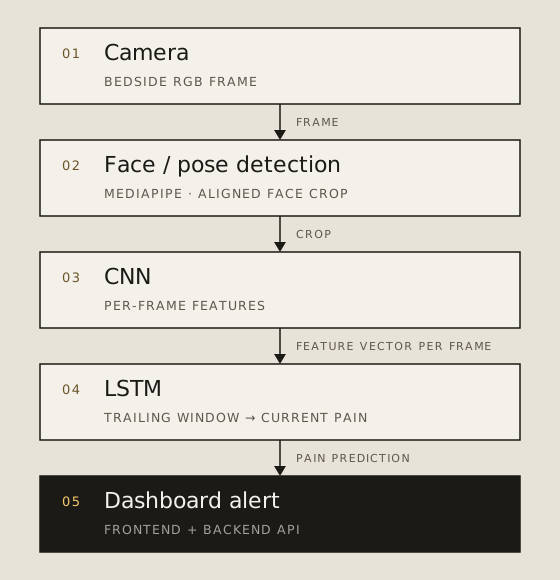 Week six: both models trained, and one result I can't explain yet
I trained the CNN for the first time and the LSTM on top of it. The model that should have won didn't, and I'd rather show that than the flattering curve.
Week six: both models trained, and one result I can't explain yet
I trained the CNN for the first time and the LSTM on top of it. The model that should have won didn't, and I'd rather show that than the flattering curve.
- Week six: moving the dashboard off Streamlit A decision, not a writeup: the carer dashboard is moving off Streamlit, because an alert that arrives late is worse than no alert.
-
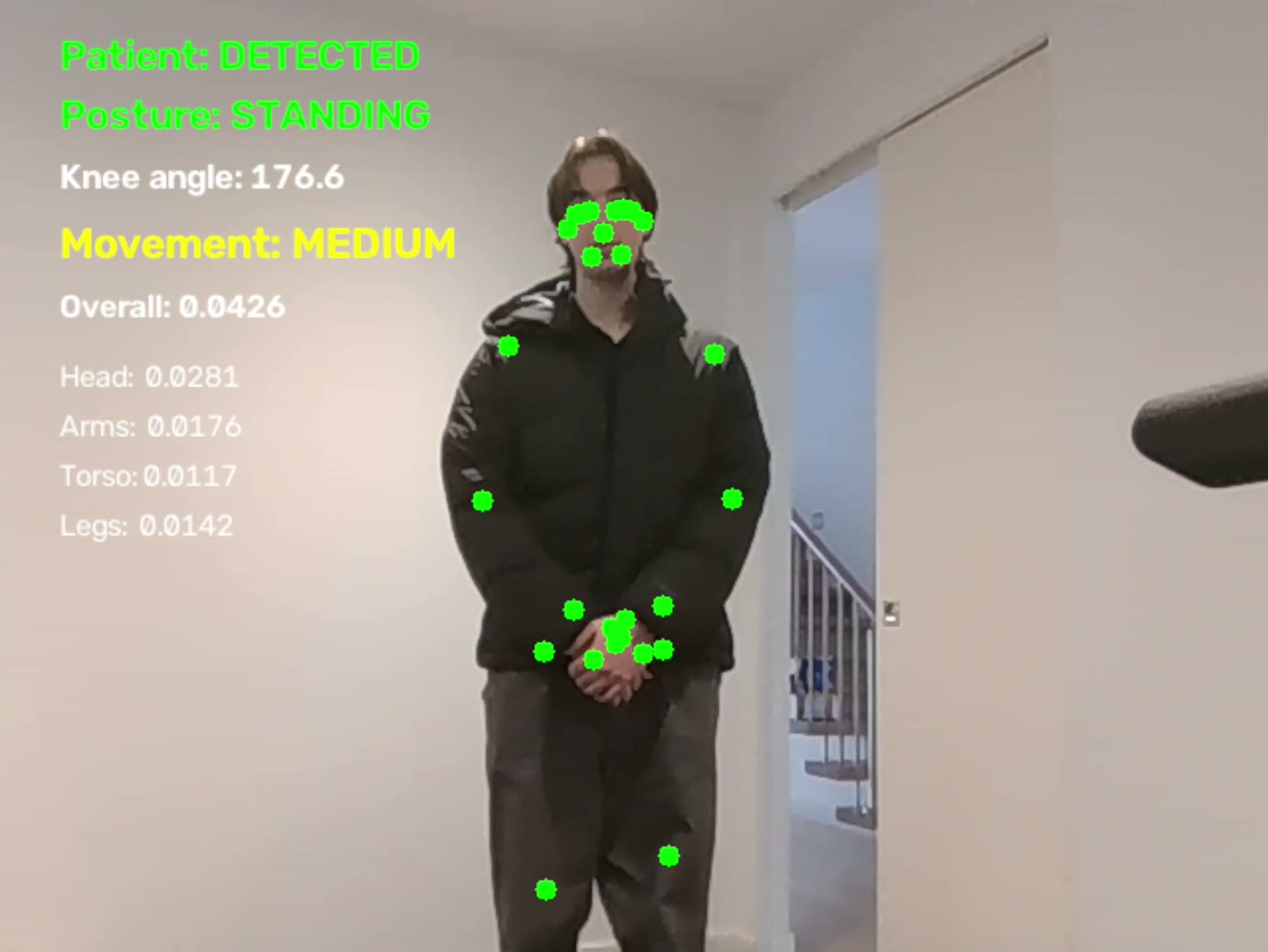 The other branch: what patient detection does when the face isn't enough
Pulse has a second branch for when the patient is out of bed. It reads the body instead of the face. Here is what the demo shows today, and what it doesn't yet.
The other branch: what patient detection does when the face isn't enough
Pulse has a second branch for when the patient is out of bed. It reads the body instead of the face. Here is what the demo shows today, and what it doesn't yet.
-
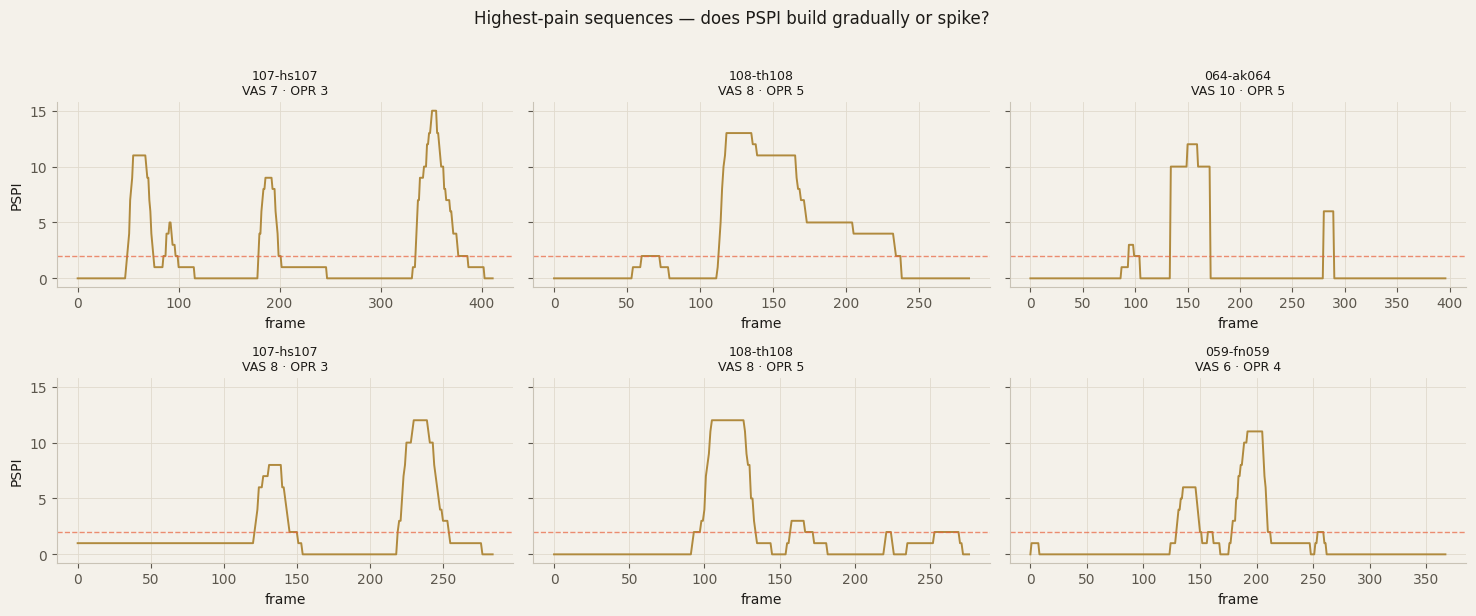 We checked whether pain has a shape before we built a model that assumes it does
Before training anything, I plotted 48,398 frames of the dataset. One finding validated our architecture. One we cannot engineer our way past.
We checked whether pain has a shape before we built a model that assumes it does
Before training anything, I plotted 48,398 frames of the dataset. One finding validated our architecture. One we cannot engineer our way past.
-
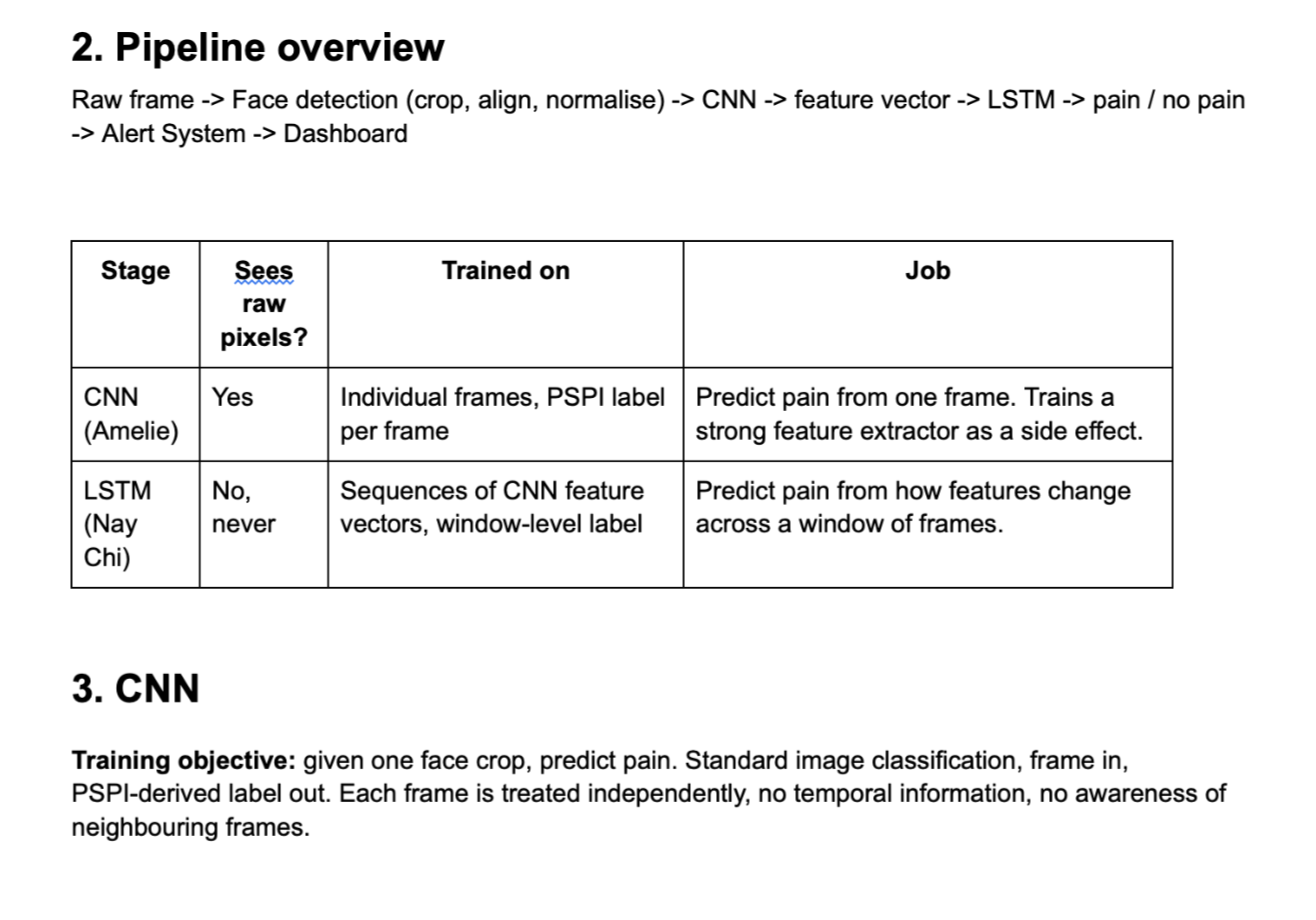 Writing the contract between our CNN and our LSTM, before either exists
Two people are about to train two models against two different ideas of what a feature vector is. Here is the contract we wrote to catch that in advance.
Writing the contract between our CNN and our LSTM, before either exists
Two people are about to train two models against two different ideas of what a feature vector is. Here is the contract we wrote to catch that in advance.
-
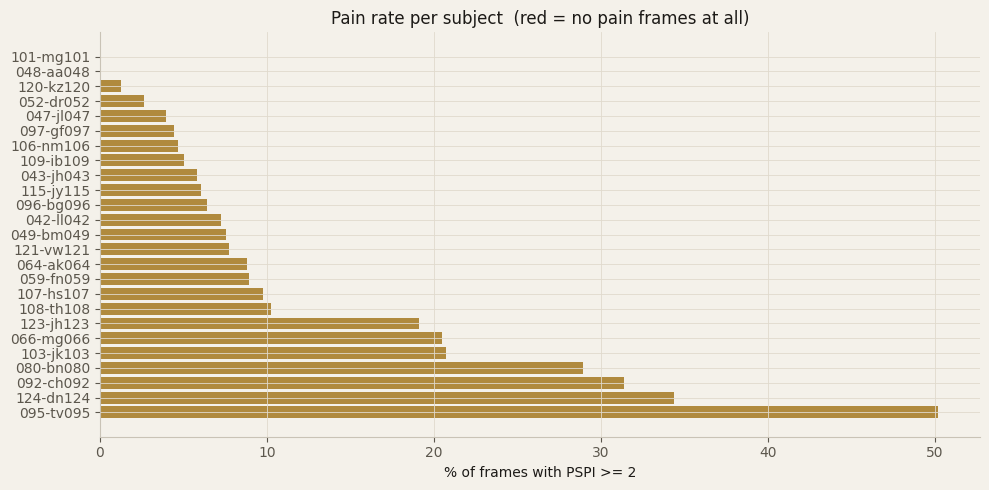 Our dataset is a physio clinic. Our room is a bedroom at 3am.
What UNBC-McMaster actually contains, and the honest distance between that footage and the room we are aiming at.
Our dataset is a physio clinic. Our room is a bedroom at 3am.
What UNBC-McMaster actually contains, and the honest distance between that footage and the room we are aiming at.
-
 Skeletons before data: writing the loop ahead of the models
We wrote the whole inference loop with stub models returning random numbers. It caught four interface bugs before the weights existed.
Skeletons before data: writing the loop ahead of the models
We wrote the whole inference loop with stub models returning random numbers. It caught four interface bugs before the weights existed.
-
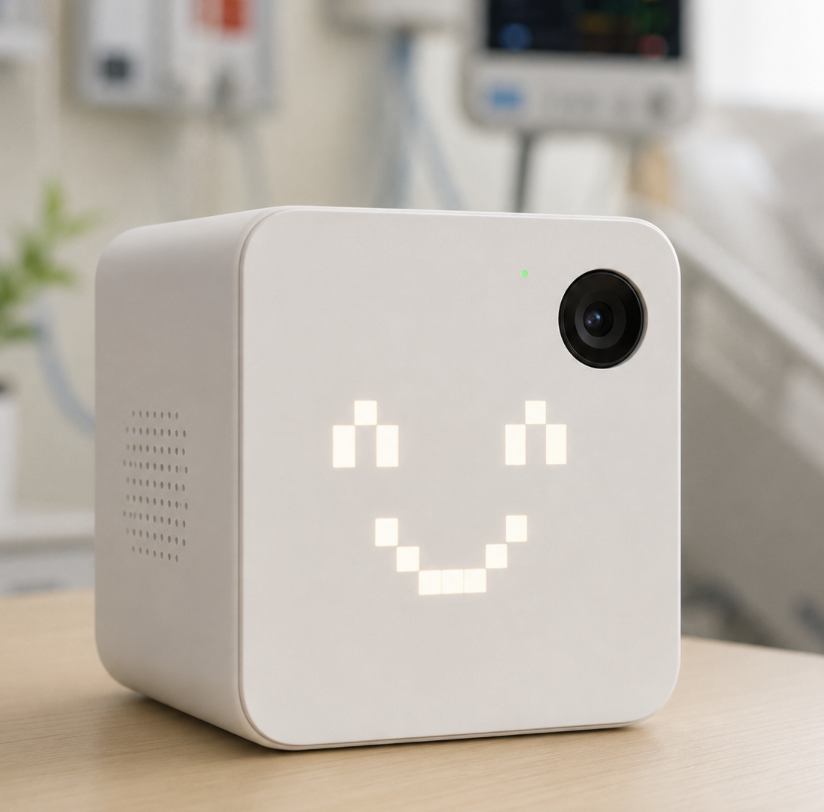 Why the device has a face
A camera pointed at a bed is a surveillance object until you give it a reason not to be. The face is that reason.
Why the device has a face
A camera pointed at a bed is a surveillance object until you give it a reason not to be. The face is that reason.
-
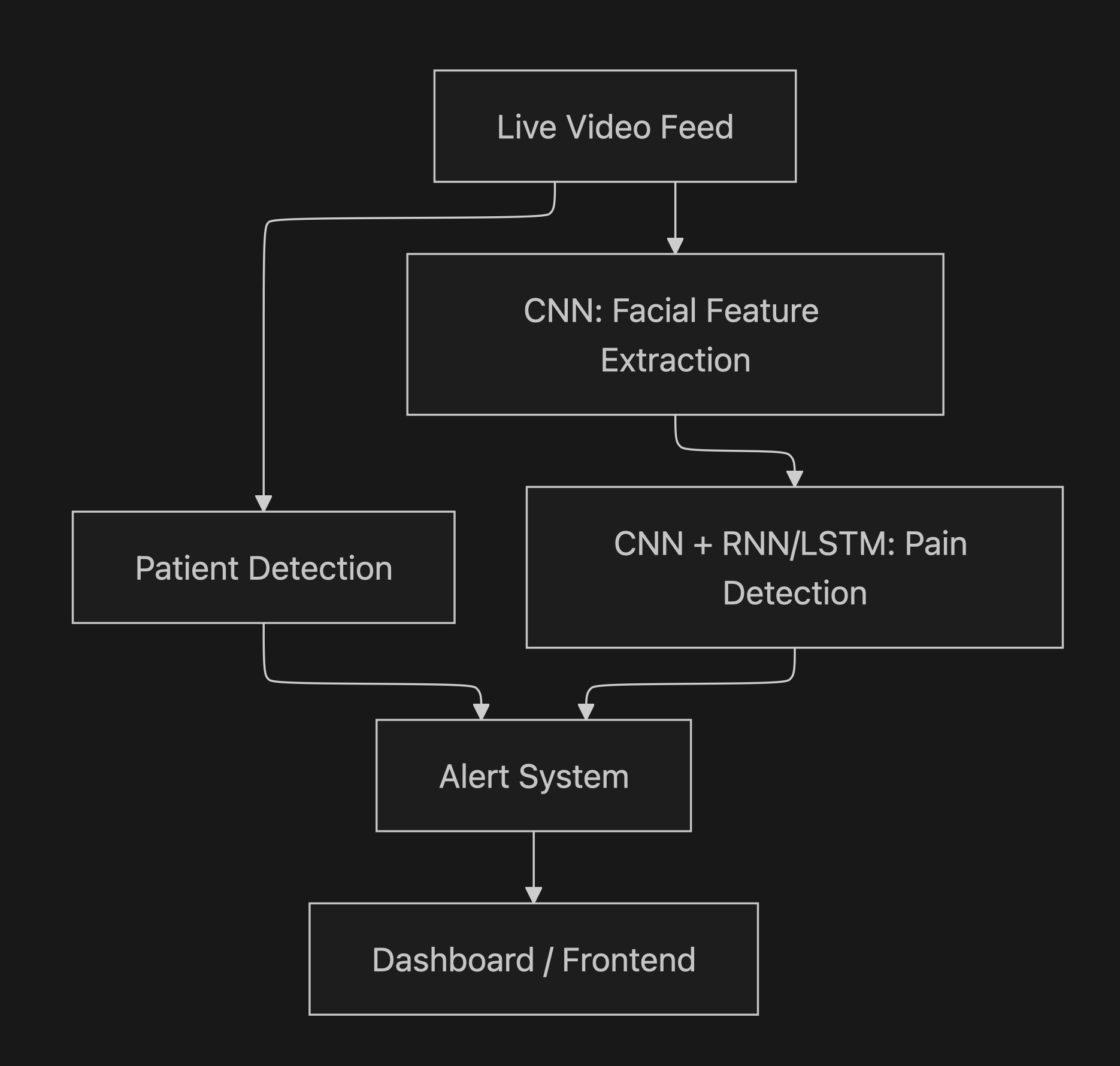 Three models, not one: our plan for splitting the pipeline
One end-to-end network would be simpler to draw and much harder to debug. We are choosing debuggable, before we've trained anything.
Three models, not one: our plan for splitting the pipeline
One end-to-end network would be simpler to draw and much harder to debug. We are choosing debuggable, before we've trained anything.
- Week one: we argued our way from falls to pain Falls detection was the obvious project. Two hours of arguing got us somewhere less crowded and more useful.